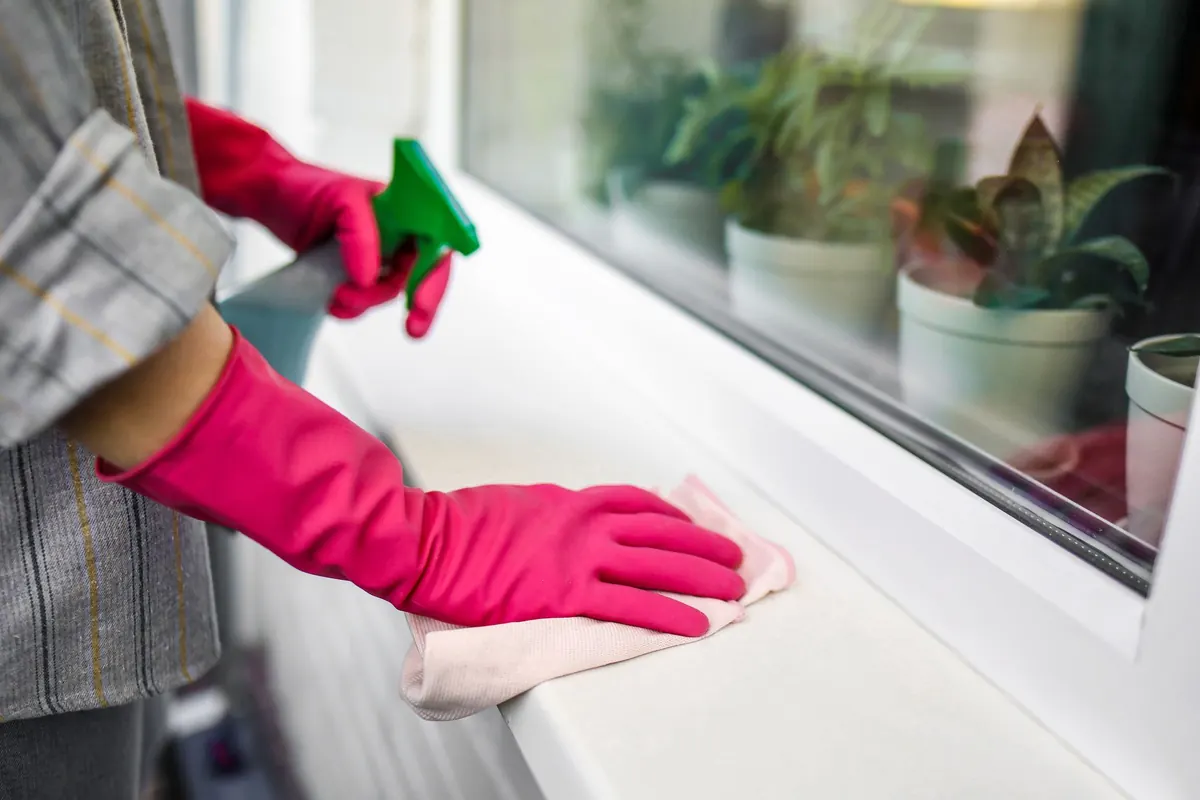
Coastal Homes and Salt Spray: A Window Maintenance Plan for Seaside Properties
A practical coastal window maintenance plan: how to remove salt residue safely, protect frames and seals,...

It usually starts with good intentions. You notice a smudge on your car’s side window or a fingerprint on the new film you just had installed in the living room. Reaching under the kitchen sink, you grab the blue liquid that has cleaned your mirrors for years. It smells sharp, it promises a streak-free shine, and it does the job almost instantly. But on a tinted surface, that bottle is a hazard. The same chemical power that cuts through grease on a mirror can slowly eat away at the delicate layers of window film, turning a clear view into a cloudy, purple mess.
If you want your tinted windows to last, understanding what is actually inside your cleaning spray matters just as much as knowing how to use a squeegee. Let’s look at why ammonia is the wrong tool for the job and how to keep your film looking transparent for years.
Window film is not a single sheet of plastic. It is a sandwich of layers, usually made from polyester, with a scratch-resistant coating on the outside and an adhesive on the inside. Depending on the type of film, there may also be dyes, metals, or ceramic particles embedded in those layers to reject heat or block UV rays. This construction is what allows the film to protect your interior furniture, keep your car cooler, and give you privacy.
The crucial part of the film is the adhesive layer. It needs to be strong enough to hold the film to the glass through temperature swings but stable enough to resist the chemicals you spray on it. Ammonia is a strong solvent. When it sits on the film, it can gradually degrade the adhesive bond, especially at the edges where the film meets the window frame. Once that bond weakens, the film lifts, and once it lifts, dirt and moisture get underneath. At that point, no amount of cleaning will fix it.
The damage does not always happen overnight. You might clean your windows once a month and see no issue for a year. But the effect is cumulative. Ammonia breaks down the chemical bonds in the film’s protective coating. Think of it like the way a nail file slowly removes the surface of a fingernail. The ammonia etches the top layer, making it rougher at a microscopic level. That roughness scatters light instead of letting it pass straight through, which is why the window starts to look hazy or cloudy.
When the film is failing, you will notice specific signs. They often appear first along the edges, near the rubber seals or the window frame.
If you spot these symptoms, cleaning will not reverse them. The film is structurally damaged and usually needs to be removed by a professional.
Cleaning window film is easy if you use the right products. You want to look for cleaners that are non-ionic and specifically labeled safe for tinted windows. These are widely available at auto parts stores and home improvement centers. They are formulated to lift dirt without attacking the film’s chemistry. If you prefer to make your own solution at home, a simple mixture of water and a few drops of mild dish soap works well.
Avoid harsh scrubbing. The goal is to let the cleaner do the work.
For heavy interior grime, a foaming cleaner designed for tinted glass can be useful, but always test it in a small corner first. Do not use any product that contains ammonia, vinegar, or alcohol as a primary ingredient. Vinegar is acidic and can also degrade the film over time.
One mistake people make is treating the inside of a car window the same as the outside. The inside is where the film is installed. That means you cannot use the same glass cleaner you use on the windshield for the side windows. Keep a dedicated bottle of film-safe cleaner in the car to prevent mix-ups. Another mistake is using a no-name cleaner without checking the label carefully. Some "glass cleaners" contain ammonia as a power booster and do not list it prominently on the front of the bottle.
Some cars and homes have factory-tinted glass, which is a different product from aftermarket film. Factory tint is usually inside the glass itself and is generally more resistant to chemicals. However, it still is not immune to strong solvents. And many people have aftermarket film installed over their factory tint. When in doubt, treat any tinted surface as a film and use a gentle cleaner.
If you are having new film installed, ask the installer which cleaners they recommend. They work with these products daily and can tell you which solutions are safest for the specific type of film you are getting. Professional installers often give out small care kits with the right cleaner and a microfiber cloth, so use them.
The best way to protect tinted window film is to avoid harsh chemicals entirely. Stick to a dedicated film-safe cleaner or mild soap and water. Inspect the edges and corners periodically to catch any lifting before dirt gets trapped underneath. If you are unsure whether a product contains ammonia, check the ingredients list for ammonium hydroxide. It is the specific compound you want to avoid.
Keeping film clean is important, but it is never a substitute for professional maintenance. If you notice the edges are peeling or the film is cloudy despite careful cleaning, the film has likely reached the end of its life. Removing film without damaging the glass—or the defroster lines on a car’s rear window—takes experience and specific tools. In those cases, calling a professional window care service is the safer, more cost-effective choice. They can strip the old film, clean the glass, and install a new layer that will stay clear for years.
Photo: minhthai0105 / Pixabay
A practical coastal window maintenance plan: how to remove salt residue safely, protect frames and seals,...
A room-by-room method for dusting, washing and drying window screens while keeping the mess outside, and...
A seasonal guide to window cleaning: how pollen and sap reshape spring routines, why autumn rain and...